
Apple’s Q1 2026 results once again highlighted the strength of the company’s core franchise, while also underscoring the challenge of sustaining growth at Apple’s scale. Total revenue reached $111.2 billion, representing a 17% year-on-year increase, driven primarily by the iPhone and services. iPhone revenue rose 22% to $57 billion, reflecting renewed demand for the latest models, while services revenue grew 16%, reinforcing the durability of Apple’s recurring revenue base.
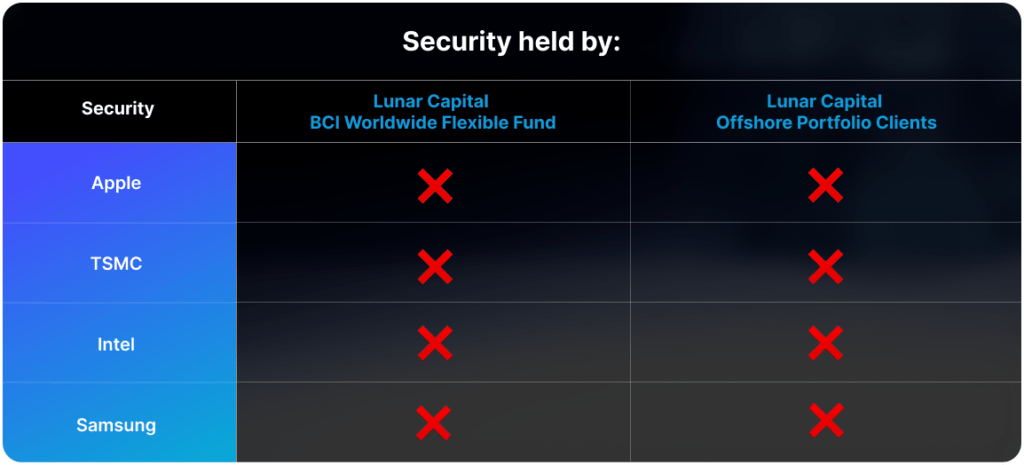
Despite the strong results, supply constraints remain a key operational consideration. Demand for Apple’s latest iPhone models continues to outpace supply, largely due to system-on-chip node shortages at TSMC. The recently launched entry-level MacBook Neo has faced similar pressure, with shortages expected to persist for longer than those affecting iPhones. Apple has explored diversification of its chip manufacturing partners, including potential engagement with Intel and Samsung, although no strategic shift has been finalised.
Consumer behaviour remains an important theme. Upgrade cycles have lengthened in recent years, but the introduction of AI-enabled features in the latest iPhone appears to be providing a catalyst for renewed demand, even if fully integrated AI functionality has yet to be rolled out. This dynamic highlights Apple’s ability to stimulate demand through incremental innovation layered onto an established ecosystem, rather than relying solely on entirely new product categories.
Capital allocation continues to be one of Apple’s defining strengths. The company has returned approximately $850 billion to shareholders through share buybacks over time, materially supporting long-term earnings per share growth. This reflects Apple’s exceptional cash generation and disciplined, patient approach to returning capital, even as it invests heavily in its supply chain and ecosystem. The strength of that ecosystem remains a key competitive advantage, although launching a true new “wow” product has become increasingly challenging at Apple’s scale.
Apple trades on a price-to-earnings multiple (roughly 35) that prices the business close to perfection. The market is effectively assuming sustained execution, continued ecosystem monetisation and limited strategic missteps. While Apple’s quality, cash flows and shareholder returns justify a premium rating, the current valuation leaves little room for disappointment, reinforcing the importance of flawless execution in the years ahead.
Click here to access your account to view statements, obtain tax certificates, add or make changes to your investments.
Our email address is: [email protected]
Disclosures
Lunar Capital (Pty) Ltd is a registered Financial Services Provider. FSP (46567)
Read our full Disclosure statement: https://lunarcapital.co.za/disclosures/
Our Privacy Notice: https://lunarcapital.co.za/privacy-policy/
The Lunar FR Worldwide Flexible Fund Fact Sheet can be read here.
This stocktake is prepared for the clients of Lunar Capital (Pty) Ltd. This stocktake does not constitute financial advice and is generated for information purposes only.