
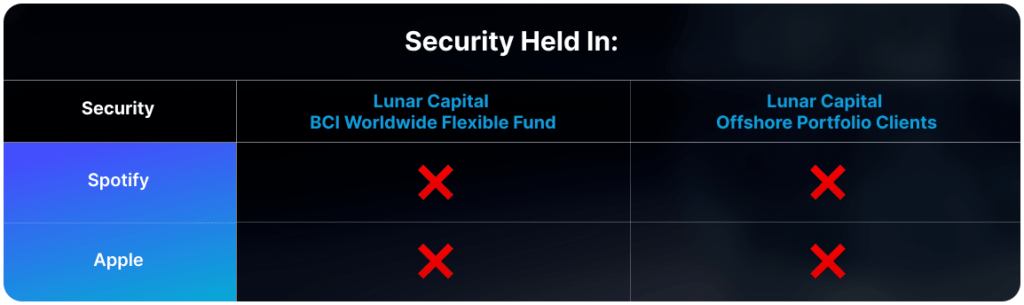
Spotify’s path to profitability is shaped by the tension between scale, costs, and platform rules. The company runs on a freemium model, with its ad-supported tier serving as a funnel into Premium subscriptions. Premium is the real engine, accounting for 88% of revenue, with 290 million subscribers (about 38% of monthly active users.) The scale is impressive, but the economics of music streaming remain challenging.
Spotify doesn’t own the music it streams; it licenses content from the major record labels and Merlin, who represent independent artists in negotiations with streaming platforms. In 2025, Spotify paid over $11 billion to rights holders while generating €17.2 billion in revenue, up nearly 10% year-on-year. Licensing costs consume most of that revenue, leaving thin gross margins despite growth.
Another pressure point has been Apple’s App Store fees. For years, Apple charged up to 30% on in-app purchases, including Spotify subscriptions made through iOS. This forced Spotify to either raise prices or absorb the hit, while Apple Music avoided the same burden. Spotify challenged the fees through regulators and courts, and recent rulings now allow external links for subscriptions. This shift enables Spotify to bypass the “Apple tax,” potentially improving profitability by reducing platform costs.
Operating performance has also improved. In 2025, Spotify reported €2.2 billion in operating income, representing a 12.8% margin; up from 8.7% in 2024. Margin growth was driven by a 1.8% reduction in operating expenses. While this signals discipline, it raises the risk of underinvesting in the platform at a time when innovation and new capabilities are critical to long-term growth.
For investors, the key question is whether Spotify can convert its massive user base into sustainable profits. Growth in Premium subscribers, better licensing terms, and relief from platform fees are critical levers. At the same time, diversification into podcasts, audiobooks, and other audio formats could broaden revenue streams and reduce reliance on music licensing. Spotify has proven it can scale globally, but the next chapter will be about turning that scale into durable margins. If it succeeds, the company could finally shift from a story of growth to one of profitability.
Click here to access your account to view statements, obtain tax certificates, add or make changes to your investments.
Our email address is: [email protected]
Disclosures
Lunar Capital (Pty) Ltd is a registered Financial Services Provider. FSP (46567)
Read our full Disclosure statement: https://lunarcapital.co.za/disclosures/
Our Privacy Notice: https://lunarcapital.co.za/privacy-policy/
The Lunar FR Worldwide Flexible Fund Fact Sheet can be read here.
This stocktake is prepared for the clients of Lunar Capital (Pty) Ltd. This stocktake does not constitute financial advice and is generated for information purposes only.